
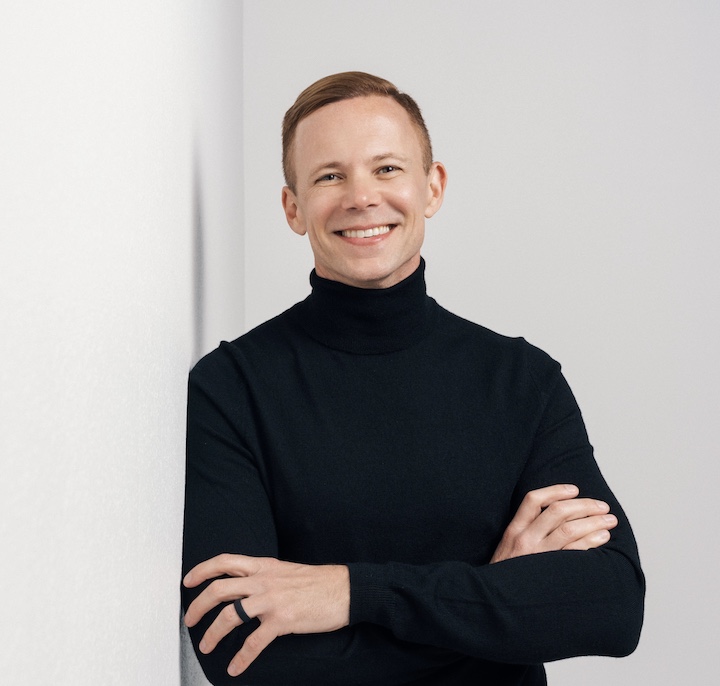
Matthew Kent Everett believes deeply in collaboration.
Since launching The Woodlands Diversion in 2023, he has centered the nonprofit on collaboration among arts organizations and across genres, from classical music to dance, visual art, literature, theatrical arts, and film.
Those collaborations move the organization closer to its goals of enriching the fine arts culture in The Woodlands and making the arts more accessible to area audiences.
“At the end of the day, we’re all pursuing the same mission,” Everett said. “We’re fostering a love for the arts, building community, and supporting young and emerging artists.”
For Everett, a classical pianist and composer, it’s hard to imagine more rewarding work.
A Dream Takes Shape
Long before Everett began mapping out the mission of The Woodlands Diversion, he knew he wanted a future in classical music. He grew up in a home filled with music. His father once sang in the San Francisco Opera Chorus, and his mother, a trained soprano, shared that same passion. By age 7, he was studying piano with his church’s gifted pianist and practicing for hours without prompting.
By 12, he was participating in classical music competitions. The chance to hear and compete alongside other talented performers resonated deeply. He knew he was on the path to becoming a concert pianist.
A competition judge, John Paul, later encouraged Everett to audition for the piano program at Sam Houston State University, where Paul headed the music department’s keyboard division. Everett was accepted with a scholarship to study under him.
“It was an ideal situation,” Everett said. “I received a great education under his mentorship.”
After graduation, he moved to New York at the advice of a music industry contact who encouraged real-world experience over graduate school. The city proved financially unsustainable, and at 22, Everett returned home wiser and more grounded.
He later auditioned for the graduate piano performance program at the University of Houston’s Moores School of Music, where he studied with Abbey Simon and Ruth Tomfohrde.
He also took a graduate piano literature course taught by pianist and composer Carlisle Floyd, who deepened Everett’s growing interest in writing music.
Finding His Way
With his master’s degree in hand, Everett believed the concert career he’d been pursuing was within reach. Instead, a few unexpected detours awaited.
In his mid-20s, tendonitis in his right arm forced him to stop performing. Around the same time, a holiday gathering brought a different realization: Years of single-minded focus had left little room for relationships.
“It was an epiphany for me,” he said. “I had sacrificed so much for the career I’d always wanted. That was the beginning of a new journey.”
Even as he worked steadily as a musician, Everett began re-evaluating his dream of becoming a concert pianist. After resting his arm, he juggled teaching at several community colleges, serving as part-time music director at a church, playing for Houston Ballet Academy, and occasionally directing musical theater. Without intending to, he had built an exhausting schedule across multiple organizations. The pace was overwhelming.
Building Something New
After about 10 years, burnout began to eclipse his passion for music. Everett resigned from his part-time positions and pivoted to real estate in Austin. But he soon discovered real estate was no cure for burnout. The pace was just as exhausting, and he felt he’d made a wrong turn.
After eight years, Everett returned to the Houston area to care for his mother and renew his commitment to building a full-time music career. He accepted a position as music director at a Lutheran church in Conroe, moved to The Woodlands, and reconnected with friends.
“I learned that there’s a thriving art scene here. But the more I thought about it, I realized there are different performing ensembles, but we didn’t really have a performing arts organization, an umbrella-type organization.”
What if there were a nonprofit devoted to raising awareness of local arts groups and fostering collaboration among them, Everett wondered.
“So my husband and I got a group of friends and colleagues together, people who are involved in the local arts community, to have some brainstorming sessions about this.”
The result was The Woodlands Diversion, dedicated to enriching the region’s fine arts culture through immersive, collaborative experiences. Each concert pairs music with another art form, such as movement, poetry, visual art, or drama.
Expanding Access and Supporting Musicians
Beyond creative programming, The Woodlands Diversion is focused on widening access to the arts.
“Classical music performances, by and large, are not always accessible for people who just don’t have the financial means to buy tickets,” Everett said. “That was another thing that I’ve wanted to figure out: What can we do to break that barrier?”
The organization has begun making progress. A recent grant from The Woodlands Arts Council will allow it to perform at area assisted living facilities at no cost during the holidays.
Accessibility isn’t the only priority. While honoring the classical canon, the organization is committed to presenting new and underrepresented voices. Supporting young artists is central to that vision. The Woodlands Diversion offers grants for students ages 5–18, which can be used for needs ranging from private lesson tuition to art supplies. Young artists are also encouraged to audition for concert performances.
A Shared Mission
Everett has great respect for Young Texas Artists’ work supporting emerging classical musicians.
“I absolutely applaud what they do,” he said. “Winning a prize at the Young Texas Artists Music Competition is a big deal. It carries real weight.”
He and Young Texas Artists President/CEO Susie Pokorski have been discussing potential collaborations between the two organizations.
“I told Susie, we have to hire musicians. And if we’re hiring Young Texas Artists winners, they’re going to be top-notch, world-class musicians. So one of the ways that we can help is, we can hire YTA artists and we are thrilled to do so!”
Passing It On
What advice would Everett offer young artists like those who compete with YTA?
“There are all sorts of ways that you can perform. You may not get an opportunity to be a soloist with the Houston Symphony right out of the starting gate. So, look for other ways to collaborate. If you’re a violinist, for example, there are lots of other string players who you can form a trio or a quartet with.”
Teaching, he added, is another meaningful path.
“I think every musician should have the experience of teaching in some sort of capacity. Part of our calling as artists is to pass on what we’ve learned to the next generation.”
Everett is now focused on living out that commitment through continued collaboration with Young Texas Artists and through the expanding work of The Woodlands Diversion.